The knowledge fields around transgender, gender-creative, and gay children are rapidly shifting and growing. While gender non-conforming, “queer” (in the non-normative sense of the word) and even transgender children have existed before, in my work I argue that the particular ways that we are responding to and naming queer and trans children in the 21st century is unique. As increasing numbers of children declare gay, transgender, queer, and gender-creative identities and openly express their genders and desires, they are living different childhoods than generations before. We are watching knowledge evolve in real time, as researchers produce more nuanced information and data, and families pioneer different ways of parenting.
Recently I have become fascinated with two new categories, or ways, of naming children who are being raised in a gender conscious way, and/or children who are expressing their gender and sexuality creatively, theybies and drag kids. In many ways, these are merely new labels to describe things that have happened before, as I will explore more below, and yet, the visibility of these kids on various internet platforms also points to increasing societal acceptance around children’s expansive gender expression.
Theybies is an instagram account, as well as a hashtag used by other parents on Instagram. It refers to babies and toddlers whose parents/care-givers are raising them in a gender-neutral way. These parents don’t dress their children according to the gender binary, give their children freedom to explore a wide variety of toys, clothes, and colors, and refer to the kids with the pronoun “they” until they are old enough to declare their own gender.
I am particularly interested in these parenting accounts because my research began almost a decade ago because of a “theyby,” although Storm’s parents did not use that particular word. Storm made international news when their parents declared that they would not reveal the sex of their baby in an interview with the Toronto Star. The article quickly went viral, prompting passionate responses, and often anger from readers around the world, including accusations that this was child abuse. Kathy Witterick and David Stocker, Storm’s parents, believe in democratic parenting and they wanted Storm to grow up with more options and fewer limitations in regards to gender. Their story, and the anxiety that it stirred up in the media fascinated me, and provided the seeds for my PhD research.
Storm’s story also pointed to the ways that we confuse sex/gender, as headlines declared the couple were raising a “gender-less baby” when in fact they were not making Storm’s sex/genitals public. Other headlines claimed they were keeping Storm’s gender a secret, even though they believe that no-one but Storm can determine Storm’s gender.
Stories about the family also showed a misunderstanding of what “gender-neutral parenting” is. It is not, in fact, about erasing gender and raising children “genderless,” but is about expanding gender options for kids, and giving them gender self-determination, as Jane Ward neatly explains here and here, and Arwyn Daemyr explores in her book on gender-diverse parenting.
Over the years, I have kept tabs on little Storm, and have read with interest the stories of other babies being raised without a gender designation, like Pop of Sweden and 5 year old Sasha in the UK. There are many families who support giving their children options in regards to toys/clothing, but fewer who will keep their sex assigned at birth private. And fewer still who publicize their decision.
When Storm was three, a follow-up story was released, “Remember Storm?” and I was fascinated to learn that Storm was calling themselves a boy sometimes, and a girl at other times. And then, in 2016, right as I was finishing my PhD, another update came out, “Baby Storm Five Years Later.”
Aha, I thought, Storm was a girl. It was satisfying to have an answer to something I had been curious about for many years. But then I realized, No, Storm is a girl. I still have no idea what Storm was (assigned at birth), and frankly it is odd that I should want to know what is between her legs. In the article Baby Storm Now, her Dad reflects on the last few years, and how things have changed in society. He thinks that their story would be less sensationalized today, but also points out that there are still few people who would make the same decision that they did, and that society continues to limit children’s abilities to make decisions for themselves.
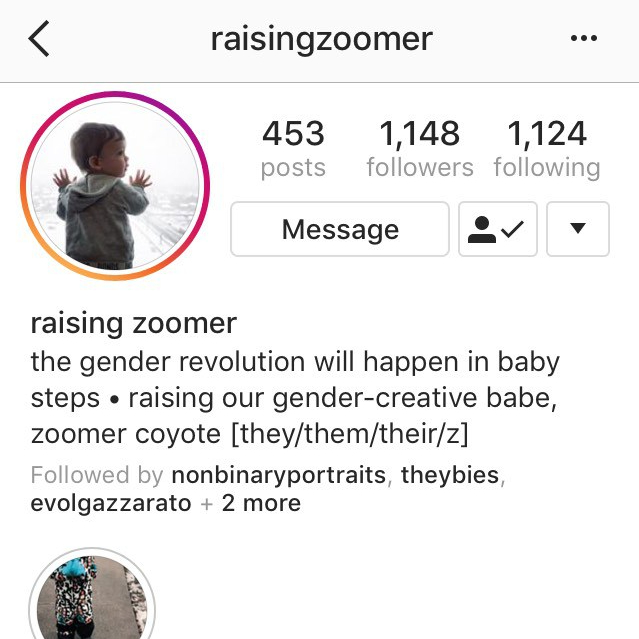
Still, in 2018 it seems that there are at least a few more families visibly raising “theybies” and posting about it on social media. Along with Theybies, there is also Raising Zoomer, and others that can be found through the hashtag #theybies. (Not all of those accounts are public, so I am not linking them here). At a very basic level these social media accounts show how the singular pronoun “they” is becoming used more as a gender-neutral third-person pronoun. They also provide evidence that some parents choose gender-creative parenting, not just as a reaction to a child’s gender non-conformity, but as the fundamental basis of their parenting philosophy from (before) birth and beyond.
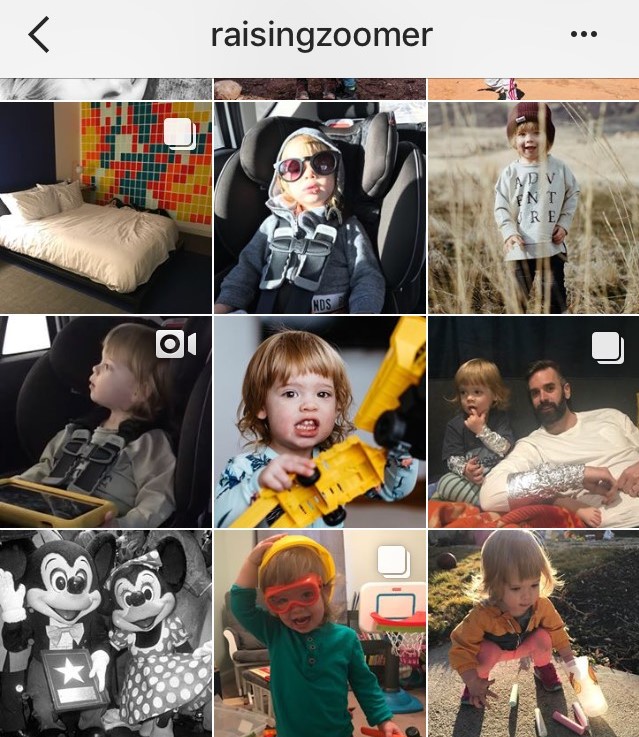
Zoomer’s parents also have a blog that is dedicated to teaching other folks about gender-creative parenting (GCP), and includes articles about how they navigate strangers’ questions about Zoomer’s gender, commentary on society’s interest in babies’ genitals, and responses to the idea that GCP is a social experiment (spoiler: why yes, it is–all parenting is a bit of an experiment). They also write about how their own parenting decisions were shaped by the story of Storm and Sasha.
I am excited to watch Zoomer and these other theybies grow. The numbers of parents making this parenting decisions may still be small, but I am eager to follow their journeys. Many in society are still invested in the gender binary (look at how popular gender-reveal parties have become in the last few years!) and yet these parents, and the parents of many gender-creative kiddos, are choosing different paths for their children. As someone who deeply cares about the way that we think about children’s gender, I am fascinated with these families’ stories, and the ways that children’s gender options are being expanded through their parenting choices.
Beyond matters of gender, my research has shown that decisions made by parents of transgender, gender-creative, and gay children are influenced by their understandings of children’s autonomy and independence. Ultimately they believe that children have the ability to know themselves, and should be given the right to make their own decisions about their body and gender. Their parenting choices are also shaped by what I call “anticipation work” and particular investments in their children’s futures.
I would love to do an ethnographic study and interview parents of theybies one day, to see how their philosophies may be related to and differ from the parents’ of trans/gender-creative/gay kids that I interviewed. Until then, I appreciate the opportunity to watch via social media as these little ones grow up and explore their world. Some of them are so dang cute! and they are changing society one baby step at a time.
[Stay tuned for my thoughts on drag kids in a future post, this post has gotten quite long already!]

 The Spaces In Between
Leave a comment